History of Ghee
Key Takeaways
- Ghee has origins in ancient cultures, particularly in India.
- It is celebrated not only for cooking but also for its cultural significance.
- The method of making ghee has evolved but retains traditional practices.
- Ghee has experienced a resurgence in modern culinary practices.
Discover the rich history and cultural relevance of ghee, a form of clarified butter that has been cherished for centuries. From its origins in ancient culinary practices to its place in modern kitchens, ghee is more than just an ingredient; it's a staple that tells a story of tradition and nutrition.
What is Ghee?
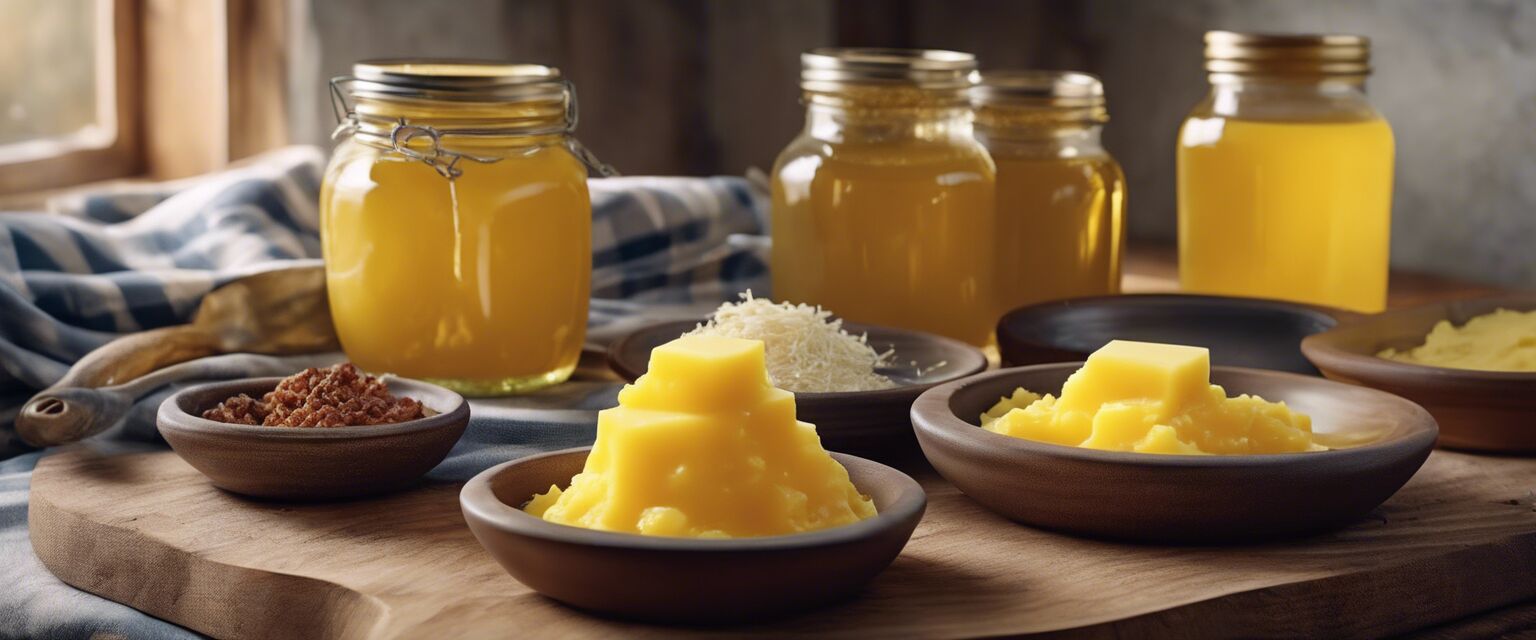
Ghee, often referred to as clarified butter, is made by simmering butter to separate the milk solids and water from the fat. This process results in a rich, golden butter that is beloved in many cuisines across the world.
The Origins of Ghee
Ghee's history can be traced back thousands of years, with its earliest origins most commonly associated with the Indian subcontinent.
| Region | Historical Significance |
|---|---|
| India | Ghee is revered in religious rituals and traditional cooking. |
| Middle East | Used in various cuisines for flavor and preservation. |
| West Africa | Inculcated in cultural dishes and local traditions. |
Select Culinary Uses of Ghee
Ghee has a versatility that shines in numerous culinary applications. Here are some notable uses:
- Cooking: Ideal for sautéing and frying due to its high smoke point.
- Baking: Adds a rich flavor to baked goods.
- Flavoring: Used in dishes to enrich flavor profiles.
- Finishing: Often drizzled over dishes as a finishing touch.
Cultural Significance of Ghee
Ghee holds a significant place in the cultures of various civilizations:
| Culture | Significance |
|---|---|
| Hinduism | Used in religious ceremonies and offerings. |
| Ayurveda | Considered beneficial for health and digestion. |
| Festivals | Essential ingredient in festive sweets and dishes. |
The Evolution of Ghee Production
The method of producing ghee has changed over the years:
- Traditional Method: Involves churning fresh curd to extract butter, then simmering to produce ghee.
- Modern Method: Uses technology to speed up the process, allowing for mass production.
Process of Making Ghee
The traditional preparation involves several steps, detailed in the table below:
| Step | Description |
|---|---|
| 1. Cream Collection | Fresh cream is collected from milk. |
| 2. Churning | The cream is churned to separate butter. |
| 3. Simmering | Butter is simmered to clarify it, removing water and milk solids. |
| 4. Cooling | Coagulating the ghee for storage. |

Modern Uses and Trends
In recent years, ghee has gained popularity beyond traditional kitchens:
- Ghee is used by health enthusiasts as a fat source.
- It appears in recipes that emphasize clean eating.
- Different flavors of ghee are now available, enhancing culinary creativity.
Key Benefits of Ghee in Contemporary Diets
Here are some key benefits recognized by culinary experts:
Pros
- Rich and nutty flavor.
- No lactose or casein, making it suitable for lactose-intolerant individuals.
- High smoke point ideal for high-heat cooking.
Cons
- Higher in calories compared to regular butter.
- May not be suitable for vegan diets.
Conclusion
Ghee has journeyed through history, becoming a staple that transcends cultural borders. Whether used in traditional dishes or modern recipes, its significance remains. The rich flavor, health considerations, and culinary versatility make ghee a beloved ingredient worldwide.
Explore More about Ghee
Discover the various applications and benefits of ghee throughout history: